
We know the art of A:B testing in social media is nuanced and complex, especially when trying to measure the impact on sales conversions of creative variations. And it’s something that enterprises (large and small) have of course been working on for years. However, there still seems to be an opportunity to step back and simplify something which can quickly become overwhelmingly complicated.
Don’t re-invent the wheel
The nature of social media formats means there are just SO MANY variables you can test. Which means even when budgets to run testing are healthy there’s only so much you can realistically focus on. So, given how much research and insight is published online about social media, perhaps brands could skip some of the ‘basics’.
Of course every business is slightly different, and if it was theoretically possibly to test everything you would. But, can we look down a testing programme and use some empirical evidence to cross off (or at least deprioritise) some items? If you’re working up ads on Pinterest for example, then following their creative best practice guidance maybe means you can worry less about testing whether to include your logo or not.

Source: Pinterest for Business website
Fewer, bigger, bolder variations
As marketers, it’s easy over-analyse advertising. We spend so much time discussing, evaluating and testing it, that we can’t (I can’t!) really look at a media placement without considering the elements behind it. That’s not what goes through most people’s heads when they see an ad.
While there are all sorts of considerations here, it feels like a lot of testing activity is too incremental or subtle. You might throw 5 ads into a social media ad set with different coloured iconography and see one of them ‘wins’ out through the algorithm (more on this later). But, is this really giving us the best bang for our buck? Of course in the word of scale-testing, changing the colour of the checkout button on your website to nudge up performance is a win. But in social media, tests often don’t even run for very long. The point is, are we enabling ourselves to discover something meaningful?

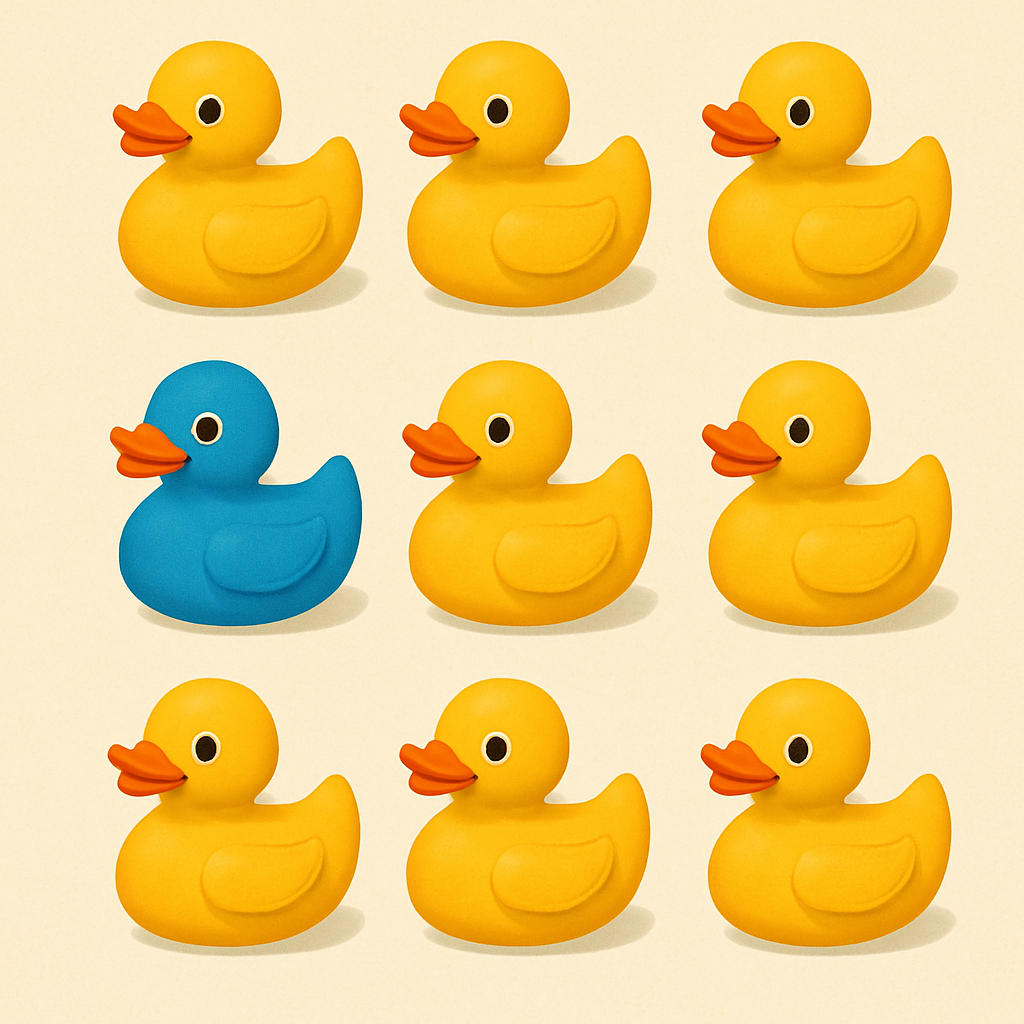
Rubber ducks by ChatGTP
Would it be more valuable to contrast (for example) brand-generated, more polished content against low-fi, influencer or user generated content over a two-month period and see which wins out. That’s a difference that everyone is going to notice, not just us marketing nerds! Or how about testing whether ads designed for a US market can be directly reused in Spain with just a translated caption? Those are the sort of things you can really get a read on and feed into strategic creative and executional planning.
Testing at an above-campaign level
We know that including multiple ad variations in an ad set is helpful for many reasons. And your typical social media campaign report will showcase the best performing one – but we should maybe challenge what we’re taking away from these reports.
Different campaigns will likely feature different products, services or brand themes. So, depending on how differentiated the ads were, we can hopefully get some learning on which (for example) types of products resonated best with an audience. But, when it comes to understanding a winning ‘creative execution’ what can we glean? It feels like too often there’s a desire to extract learnings where other variables are just muddying the water.
This is where the (hard) work to define a structured above-campaign testing approach comes in. In this context, if we have some agreed creative best practice (as per the first section above), then we can hopefully trust that our creative – for this specific campaign – is going to perform ok. In which case, we can look more at the fundamental differences of what the campaign included (products, services, key messages) than how we creatively delivered them.
Wrapping it up
As I’ve touched on throughout there’s nuance all over the place. But these feel like some – principles let’s say – which could perhaps save someone from battling with a crazy-complicated Excel sheet or, worse still, getting to the end of the year and still not *really* having a clear view on what are the key creative variations that impact performance for your business.